
RADIATORS FOR TRANSFORMER
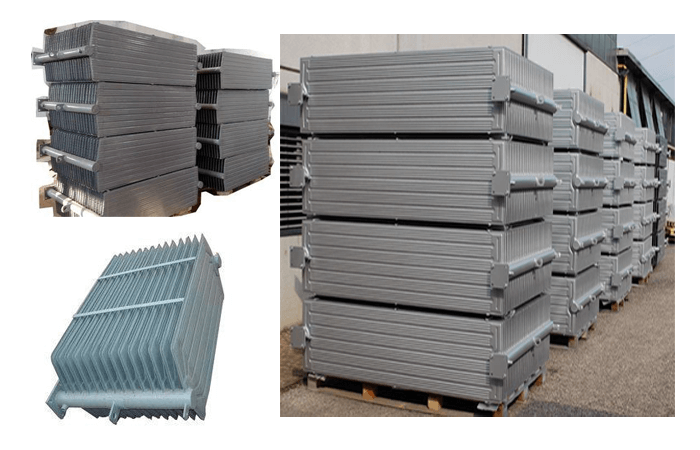
A transformer radiator is a cooling device attached to an electrical power transformer. Its job is to dissipate heat generated inside the transformer so that it can operate safely and efficiently.
Why transformers need radiators
When a transformer is working, electrical losses in the windings and core produce heat. If this heat is not removed :
- Insulation can deteriorate
- Efficiency drops
- The transformer’s lifespan is shortened
- It may overheat and fail
How a transformer radiator works
Most oil-filled transformers use transformer oil for insulation and cooling.
- Hot oil rises inside the transformer tank.
- The hot oil flows into the radiator panels or tubes.
- Heat is transferred to the surrounding air through the radiator surface.
- The cooled oil becomes denser and flows back into the transformer.
- This natural circulation cycle continues during operation.
For larger transformers, cooling fans may be added to blow air over the radiators (forced cooling).
Types of transformer radiators:
- Panel radiators – flat plates welded together; common in distribution transformers.
- Tube radiators – banks of steel tubes for heat dissipation.
- Finned radiators – extended surfaces for better heat transfer.
- Detachable radiators – can be removed for maintenance or transport.